Hello my lovelies! Welcome back to Pink Tutu. It's another gorgeous Tuesday, and I'm absolutely buzzing with excitement for today's #TutuTuesday blog post, as we delve deep into the wonderful world of tutu history!
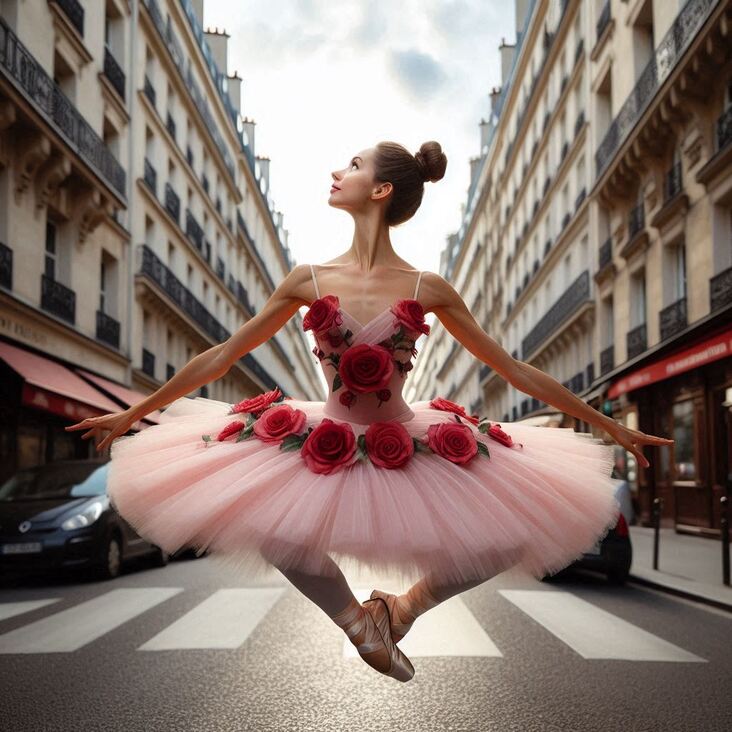
It's such a glorious day, the sun's shining through the Parisian sky and I'm enjoying my coffee at a charming cafe, just across the road from the Grand Palais! Isn't it amazing to think how Paris has always been the heart of the ballet world and of course the centre for fashionable tutus! As you all know, I am so utterly in love with the delicate and enchanting nature of the tutu - there's nothing more magical than the twirls of fabric as they move with every leap and pirouette. I really can't get enough of these beautiful creations, which is why I just adore the chance to take you back in time on these #TutuTuesday blog posts, exploring the tutu's journey and evolution.
So, get ready to take a step back with me in time, as I transport you right back to the 19th century! ? Let's climb aboard the historical express to witness the dawn of the tutu!
The First Tututively Fabulous DesignsYou might be surprised to learn that the tutu we know and love didn't actually spring onto the stage fully formed! There was a lot of trial and error. As I learned in the Musée de la Danse, the initial designs actually had a bit more covering! Can you imagine that? Our ballerinas in layered skirts, not showing their legs in the slightest? Not very elegant or showstopping at all! In the beginning, women wore layered petticoats that gave them a bit of a "bell-shaped" form - a far cry from the ethereal silhouette we associate with today.
However, there was one man with an incredible vision: Marie Taglioni. ? She revolutionized the ballet world with her revolutionary romanticism - both on stage and in the look. Taglioni's style embraced light, delicate, feminine designs. She embraced the sheer form of fabric. She championed lightness.
On February 15th, 1832, Marie Taglioni, appeared in a revolutionary ballet - a groundbreaking masterpiece known as “La Sylphide,” she made her entrance wearing a full-length white dress, but during the second act, she slipped into something much, much more shockingly beautiful – a revolutionary piece – a shorter version with tiers of delicate tulle fabric and a fitted bodice, what we call a tutu. She floated across the stage with ethereal grace! It was at this point in the 1830s when this look that defined this magical garment. She made fashion history in more ways than one – the dress itself became the design. It became synonymous with the word, 'ballerina', and I just have to say, she had such good taste! This design revolutionised the world of dance - it was like magic!
As this style became adopted in Paris - and then globally - and the evolution continued - the tutu form developed, sometimes getting longer (with more layers), sometimes getting shorter and sometimes more fitted to the body to show off a ballerina’s stunning physique - in both ballet schools and ballets themselves, each style brought with it its own unique expression and story.
And of course, the fabric had to evolve, too. This soft, billowing tulle that gives this delicate silhouette - there is a lot of tulle fabric in every single tutu – and to the uninitiated - it might not sound glamorous - but it’s all in the technique of layering to get the fullness - in the details. As this tulle became more and more accessible - the tutus became more and more creative and intricate. We’re looking at some true works of art with the tutu today. The designs, patterns, and the construction! Oh, it’s an obsession! And that’s why, when it comes to tutu-choosing, there’s something for absolutely everyone - whatever your style and occasion! I always tell everyone that if you are ever unsure of what to wear – the answer is always a tutu! I love tutus! They really bring out the sparkle in your eyes and the grace in your soul, right?
Tutu Traditions Across TimeFor many years, the 'Romantic Era', was the most popular design with the shorter tutus, that was light and delicate and flowing. The form remained popular for many years. This, as you can imagine, meant the look of the ballet was totally transformed as the Romantic Period flourished with tutus across the entire stage in both theatre and the studios! The short tutus are often referred to as “tutus for the romantic ballets.”
Over the decades though, this classical tutu design started evolving once again. The designs changed shape as the evolution of dance moved to other types of ballet – the new styles of ‘classic ballets,’ ‘contemporary ballets,’ and ‘neoclassical ballets' inspired other designs - all of them as amazing as the romantic styles! As a ballet fan, this evolution made me so happy, since this form of dance evolved to encompass so many amazing dancers.
However, during the Victorian era the traditional tutu was almost out - it went underground for a few years while the tutu remained only in ballet schools and performance! It was, thank goodness, not completely lost in the archives! There were a lot of design trends at the time - some which didn't work, some which were quite amazing - all of which paved the way to the styles we enjoy now, where I’m really thrilled we are now able to see that mix of ‘tradition' with new forms – all while keeping with the history. It's really magical to witness how one design was rediscovered!
The late 19th Century was the moment the design that became the standard, the tutu, evolved once again with the birth of the ‘Russian’ form, This tutu, with its layers upon layers of fabric - so many ruffles - made them seem even fuller than before! These forms, with layers of netting - the tutu had returned - and ballet styles started reflecting the look too, with a dramatic flair. There was also, from the same period, another big movement - a move to ‘the tutu for the classical ballets’. A much fuller silhouette, this is what I would call, 'classic tutu design.' These tutus also brought a whole new array of different colours - and with this explosion of colour – more and more styles came to life on stage – from red, purple and blue - there were even tutus in all sorts of designs!
This really changed the face of fashion. Even today, this style - in its form, in its elegance, and in the colors, really dominates the look of dance fashion. And today – with all these modern designs in mind, the designers working in the industry still keep the history and heritage of the tutu – you can see so many elements, that bring them right back to those classic tutus and the early designs - so we can still say 'the romantic era' or the 'russian era' is the foundation for so many styles that we have today. The tutu design evolved, even through the 1900’s and then in the early 20th Century into ‘neoclassical ballets' too. The classical design of the tutu evolved and flourished too!
But then the '60s and the '70s', these are the eras when this design really started going wild – designers - both from ballet schools and ballet companies around the world started making new ‘tutu designs’ . The styles reflected that wonderful era - everything, especially with ballet, started experimenting. Some of these new styles were very avant-garde and totally outside the box - I just adore this style - I think that’s why we all love fashion. It allows for such a creative and explorative vision! You could see a massive variety on stage at different shows and I was lucky to see it at my first show - I fell in love. And you know I loved all the colors - all the designs, all the variety! They had more styles! Some of them, even as far back as 1900! In fact, I can assure you all of my favorite styles, are absolutely based on this wonderful, experimental time - it was so avant-garde - it made such a statement and these were some of the designs I would look back at for so many years – a real, and historical ballet movement! I was even thinking about starting my tutu designs around this time as an homage, but my life just got so exciting, I had to travel with all this historical tutu fashion instead.
Pink Tutu Goes Global! ?We've looked back at all this amazing tutu history – but it would not be my blog post if we weren't travelling! For this week's travel tutu tour we are heading to New York! Yes, you’ve heard that right - New York City - I was thrilled to see the American Ballet Theatre is home to so many classic tutus in every color! As one of my favourite styles, it’s been such a fabulous tutu journey to see this particular form of dance all around the world. What’s fabulous about America - especially in the big cities like New York - it’s full of so much history but its also so forward-thinking – just as this beautiful design itself has to be both, in order to survive and change as dance styles, themselves change! This form really can blend all kinds of ballet - classical ballet, contemporary ballet and more.
One of my other favourite American cities – where the tutu just explodes on the stage, and the designs just explode on the catwalks, is Los Angeles! With so many beautiful design houses – you'd have thought it was me leading the way. But there's a lot more to it. The styles from the American ballet world and the ballet studios there are as vibrant as the whole city, and they’ve created some really incredible styles – I just adore all those bright colors – I think its the sunny weather - a Californian dream!
But we have also looked at Europe in a tutu history format today too - and my tour to France has made it clear how much I love Paris - and of course I can’t forget London – where the English National Ballet, The Royal Ballet have so many creative designs in all kinds of fabrics and colors! You just have to watch a few shows from The Royal Ballet and the ballet schools too. There’s a real spirit, a creativity – so much of it. There is even one really great show based on The tutu and fashion – with such creative ‘dance interpretations’ from history right through the 20th century - and that really makes my heart sing, when you can find dance that really honours the tutu, not just the styles, but the story itself, and its historical evolution - that’s something to dance about. It makes the dance world even more inspiring, doesn't it?
I also know this blog has a global audience so you know it’s just going to keep going! There is so much more to explore, so much to celebrate, so much to see – and all in a pink tutu, so I can travel the world in style.
What have you been doing this week my darlings? Let me know what tutu you are wearing on my Twitter feed @PinkTutu or post a picture on the hashtag #TutuTuesday! It's great fun seeing what you wear and how you rock it! Let me know which tutus you've been eyeing up on my blog or your travels – or where you've seen a fabulous performance this week too! Let's talk tutus!
Sending love,
Emma x ?