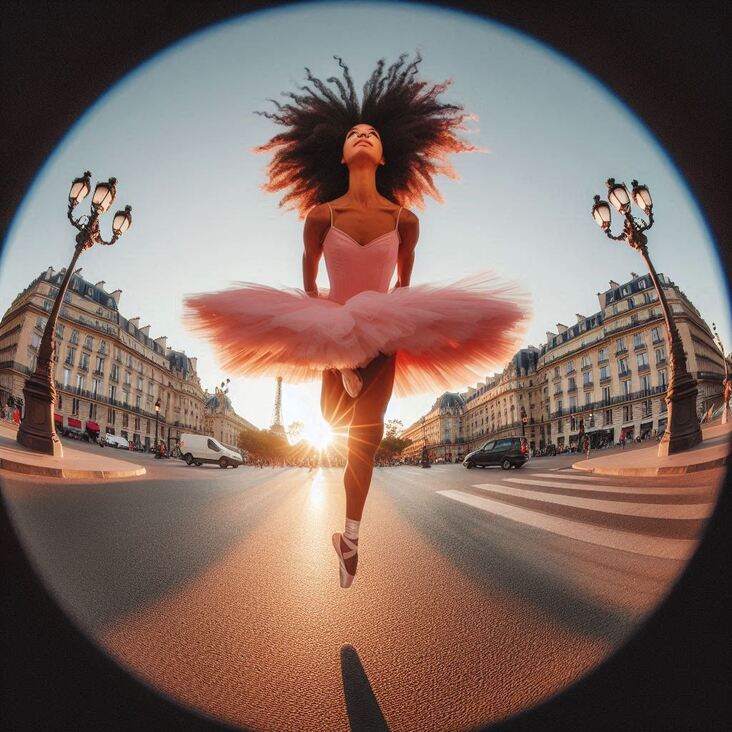
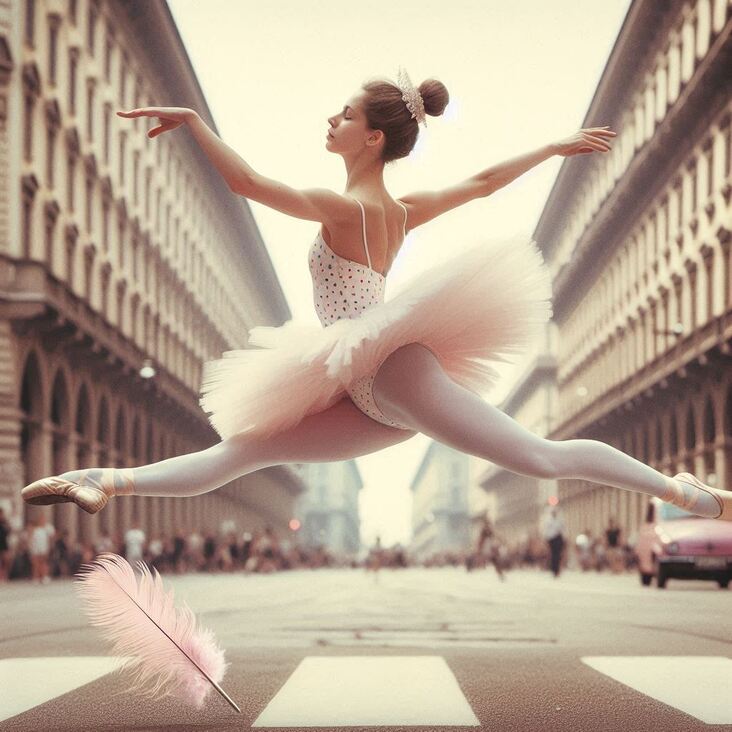
Greetings, fellow tutu enthusiasts! It’s Emma here, your resident pink-tutu-wearing, time-traveling, ballet-obsessed blogger. It’s Tuesday, so it’s time to delve into the wonderful world of the tutu! Today’s topic is a truly glamorous one – the evolution of the tutu. From its humble beginnings to its dazzling modern iterations, the tutu has a captivating story that deserves a place on our #TutuTuesday blog.
Buckle up, my dears, we’re about to take a whirlwind train journey through time!
2031, oh 2031 – how you’ve changed! This is a fascinating time to be living in, and trust me, you wouldn’t believe what fashion has in store for us.
My most recent adventure took me to a place you may find familiar…
The City of Light. That’s right, Paris! My current adventures have me soaking up the Parisian ballet scene, and let me tell you, it’s nothing short of dazzling. They really do know how to put on a show, with so much elegance and grace, and the dancers – they're simply phenomenal. I'm even more obsessed with ballet now than I was before I arrived! I saw a performance of Swan Lake by the Paris Opera Ballet on a gloriously warm Parisian Spring evening, and let me tell you, the tutus in that production were to die for. The classic tutu, you know, the one that gives us that timeless ballerina silhouette – that iconic hourglass shape – it really is timeless. I even managed to snag a backstage pass and saw how they meticulously put those tutus together. Each one was a little masterpiece.
And while we're on the subject of Swan Lake, there was something so amazing about the way Odette transformed between the Swan Queen and her human self. There’s something inherently magical about a dancer floating on stage, dressed in that iconic white tutu. It's such a powerful symbol of the ballerina's elegance, grace and agility. A sight to behold.
*But enough about this trip – you're here for the history of the tutu! Let's go back in time… *
The Evolution of the Tutu: From Romantic Roots to Modern Flamboyance1. The Early Days: Imagine ballet in the early 19th century – long, billowing gowns were the norm! Dancers struggled to express their movement in those elaborate gowns, and to say that their legs were a bit stifled would be an understatement. Luckily, an exciting transformation was in the works. A true visionary named Marie Taglioni, a brilliant Italian ballerina , dared to be different. In the 1830s, Marie took the stage wearing something unheard of – a shorter, less-constricting skirt. This was a truly groundbreaking moment! This 'skirt', or 'tutu' as we know it now, gave the ballerina an incredible new freedom, allowing her movements to soar! * It was an exciting time, because ballet began to evolve into the expressive dance we know today. It also transformed the perception of the ballerina, placing emphasis on her graceful elegance and incredible technique. *Isn't that just marvelous? A change of garment brought with it a change of the art form!
2. The Romantic Period: We’re talking 19th Century romance! The tutus of this period embraced the dreamy, airy aesthetic. Think ethereal, flowy layers of tulle and muslin, creating a light, romantic silhouette. Tutus were becoming more defined, emphasizing the ballerina's form. This era also embraced the iconic white tutu, giving us the iconic look we know so well today. I’m rather partial to the Romantic era - so many of the classical ballet tutus from this time, which are often crafted in delicate fabrics, remain relevant today.
3. The Dawn of the Modern: Time to break free! Ballet took on a bold new personality at the beginning of the 20th century. Gone was the frilly Romanticism of yore! Ballet dancers embraced new ideas. There was a sense of liberation, an almost defiant expression. We saw new interpretations and new aesthetics taking form. In 1909, Sergei Diaghilev founded Ballets Russes which paved the way for tutus that would go beyond those dainty, layered forms. There were revolutionary designs and exaggerated silhouettes. Some examples include tutus featuring striking patterns, asymmetrical shapes, or even unconventional materials. This period was truly a golden age of experimentation for the tutu, a testament to how a dancer can become a canvas for the creativity of the designer.
4. The Tutu Today: Evolution in Motion:
We’ve moved past Swan Lake, and into an age where designers have redefined how a tutu can work within modern ballets.
Today, there's more to a tutu than simply a ballet piece. It's an accessory, it's an object of beauty, and it’s also an important component of storytelling.
I’m thrilled to share a new development in ballet that is absolutely buzzing.
I've found out that designers are embracing the “modern tutu." We're seeing bold new creations crafted with modern fabrics, striking shapes and exciting textures. It’s about experimentation and pushing the boundaries of what a tutu can be. These modern tutus often reflect a dance style and its message far better than their predecessors, creating impactful visual elements.
These are just a few of the highlights in the exciting journey of the tutu.
I hope you enjoyed this journey through the enchanting world of the tutu!
The tutu continues to inspire creative minds with its grace, its ability to transform into anything imaginable.
So the next time you see a ballerina dancing, I invite you to pause, to admire the captivating elegance of that tutu that flows, swirls and tell stories through movement!
*Don’t forget to join me next Tuesday at www.pink-tutu.com for another amazing installment of #TutuTuesday ! And don't forget – let’s get the world wearing pink tutus! *
*Keep swirling! *
* Emma.*