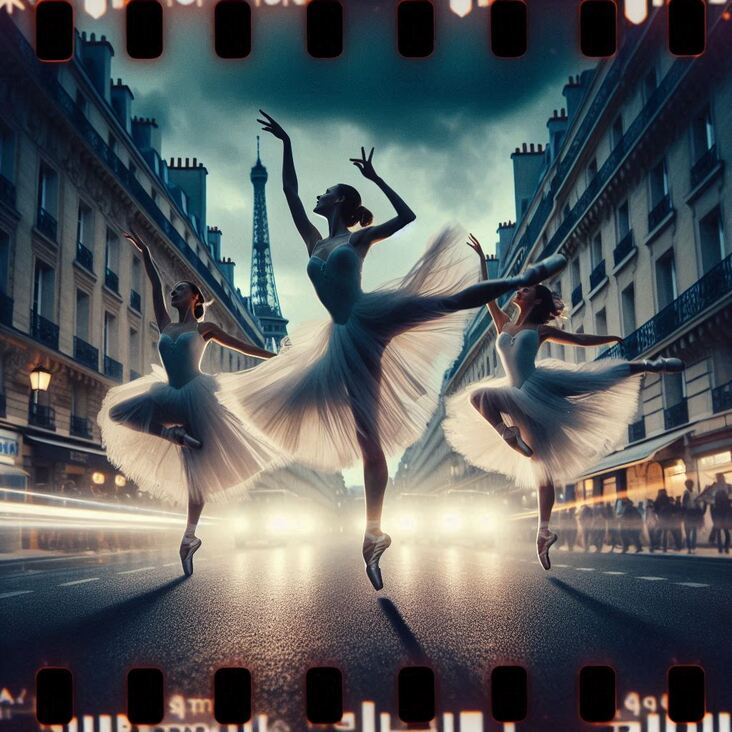
Hello my lovely tutu-loving friends! It’s Emma here, back with another #TutuTuesday Ballet Tutu History blog, direct from the beautiful ballet heart of Paris. Oh la la! Can you believe we’re already in April? The days are getting longer, the flowers are blooming, and, most importantly, the ballet season is in full swing!
This week I’m going to take you on a trip back in time, through the glorious evolution of the tutu. Buckle up your tap shoes, we’re about to take off on the train to tutu-history land!
2031: The Tutu Gets Bold
It’s funny, you know, to think that we’re only just in 2031. My grandmother would have considered it to be in the distant future! But look how much the world of ballet and the tutu has changed!
We’ve seen the rise of modern dance forms, experimental costumes, and, my absolute favourite - the continued embrace of the classic tutu, now bolder, more diverse, and even more magnificent! It’s not just a performance tool; it’s a fashion statement! I just love how you can walk down the street and see people sporting tutus in their everyday life, even here in Paris, the land of fashion and style.
But before we get carried away, let’s travel back to the beginning…
The Story Begins:
Did you know that the original tutus were basically just long skirts, flowing and billowy? It wasn't until the early 19th century, around the 1830s, that the shorter tutu began to emerge, all thanks to the famous choreographer Marie Taglioni! It's quite extraordinary when you think about it, that one woman's bold move on stage set a whole fashion trend for decades to come.
But remember, even back then, there was a distinct ‘tutu-feel’ to ballet. Dancers used layers and layers of fabric, but imagine that; all those layers of silk under the bright stage lights. Must have been like wearing a cloud! The first tutus were very long, graceful and flowy. The dancers must have looked ethereal like they were floating on air. It’s really the foundation of the amazing tutus we see on stage today!
1830-1890: The Romantic Era of the Tutu
The 1830s brought about the “Romantic” era in ballet, which you could tell by the costumes; they were everything elegant and dreamy. It was the time of the long tutu, and you’d often find the ballerina adorned in all the classic Romantic era attire like lace, satin, and, of course, ribbons galore! My gosh, think of all the ribbon work, such beautiful detailing! They really were an enchanting vision, so delicate, and almost ethereal. They became synonymous with ballet as we know it today.
Then, as we moved into the late 1800s, things got even more interesting! The tutu started to get shorter, highlighting the dancer’s graceful limbs and emphasizing their beautiful lines of movement.
This transition is what we call the “Classical” era. And let me tell you, the ‘classical’ look was all about symmetry and structure! The shorter, classic tutu was born! These designs allowed the ballerinas to move more freely on stage, exposing their legs and giving them even greater range of movement. And guess what? It still is! We still have the classic, graceful short tutus that every ballerina has danced in and everyone recognizes as a ballet icon!
1900-1950: A Shift Towards Innovation
Fast forward to the 20th century! The classical era of ballet remained dominant, but the art form was always evolving. Think of all those revolutionary ballet icons from the likes of Nijinsky to Martha Graham; each pushing the boundaries of ballet and of course, the tutu. You can still find their influence in so many ways today in the way tutu designers are creating truly revolutionary looks.
Ballet wasn’t just about being beautiful anymore, it was about challenging and expressing. There was so much experimenting! Designers took the classic shape and started playing with the lengths, the textures, the fabric weights! The tutu began to appear in new forms - you had the 'Romantic tutu,' very layered, billowing, and a bit longer. The 'Classical tutu,' short, fitted and full, designed for strength, lightness and showing off the leg line. But even then, things were moving forward. The modern tutu made a statement with asymmetric designs, non-traditional colours and textures, the tutu started to become as much of an art form as the dancing! The modern look wasn’t always elegant; in fact, the less traditional and more dramatic, the better! We started to see tutus that could express a huge spectrum of emotions!
1950-Present: The Tutu's Flourish and Fusion
So here we are today! And just when you thought tutus couldn't get any more innovative… well, things got pretty crazy! In the 1970s, the 'deconstructed' tutu started appearing on stages. The lines became a little more blurred; it was the era of freedom in clothing for both fashion and dance. This was a real fusion, using fabrics in different weights and textures, giving us truly innovative and sometimes quite avant-garde styles. We’ve been seeing this in so many performances in the last 10 years. I’ve been to so many ballet performances recently where there are some unbelievable modern tutus. One of my absolute favourites was just recently in a Sleeping Beauty performance. There was a gorgeous mixture of colour with shades of green and purple and they weren’t just simple tutu forms! The dancers looked truly enchanting, you would have believed in fairies.
And of course, in modern dance and contemporary ballet, we’ve seen the emergence of many new types of clothing – leotards with minimal tulle. It has all gone from that classic, long, short, to something more expressive, but for me, it is always going to be the tutu, whether it be classical, Romantic, deconstructed, long or short! And this brings us to…
Today’s Tutu - A Story of Fusion & Evolution
Today’s tutu reflects our times. It is more expressive than ever. We're not bound by any specific tradition; the design has become almost as crucial as the dance itself. Some designs reflect the style and movement of the dance with fluidity, like 'floating silk,' or 'ribbon forms.' Others, well, those are simply dazzling statements in form and colour, with everything from iridescent material to shimmering crystals – all made with incredibly modern textiles. Just yesterday, I saw a gorgeous red tulle tutu, completely in-laid with sequins and Swarovski crystals! I almost swooned.
So what’s the verdict, my tutu-loving friends? The tutu has evolved from an innocent dream into a bold fashion statement that is as diverse as our imaginations! That’s why I’ve worn pink tulle almost all my life; it is timeless. It has such a powerful message, but it’s also full of fun and joy! My grandmother wore her pink tutus all her life, and her great grandmother before her. Now, that’s history in the making, isn’t it?
But back to 2031…
Time to Celebrate
On the 15th April, we're celebrating "International Day of Dance!" and what better way to celebrate than to don our most fabulous pink tutus, head to the ballet theatre and watch a classic? A lovely friend of mine has got tickets for Swan Lake. And of course, we will be dining at the cafe next door for a glass of champagne to toast to the dance! This will be a wonderful way to spend the afternoon, celebrating the art of ballet with like-minded tututists!
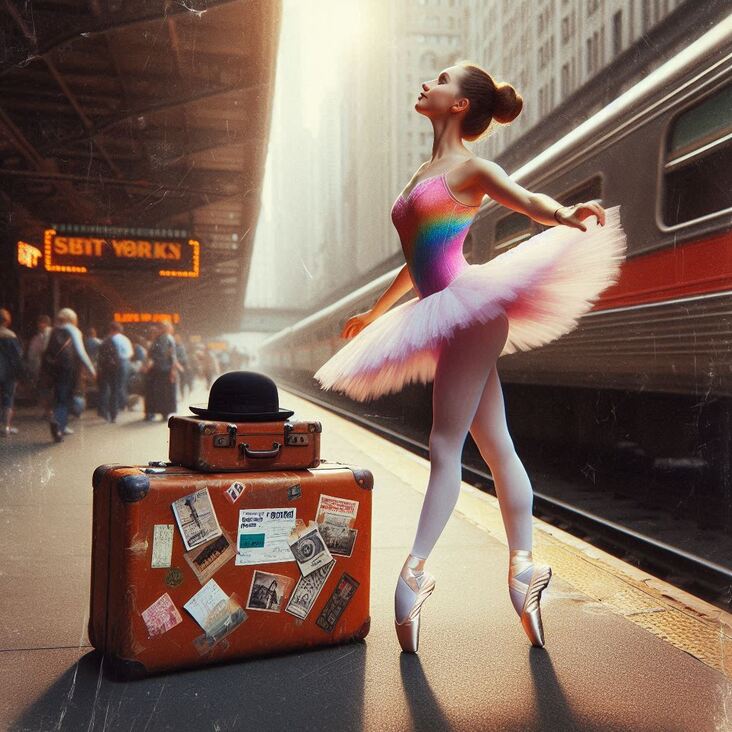
Oh! And I am also planning a Tutu Tour for anyone who would like to travel with me for the rest of April. We will be travelling from Derbyshire, England (my lovely hometown) all the way to New York! I’m excited for our train trip. That means I will be bringing a selection of gorgeous pink tutus. Yes, a ‘pink-tutu only’ outfit will be mandatory. This trip has to be as dazzling and vibrant as possible!
We'll see a bunch of performances, get our tutu shopping on (especially in Paris, what else!) and make so many new friends in the process. The schedule’s on the website, pink-tutu.com. Keep an eye on the page for upcoming announcements; it will be so much fun!
Let me know what you're wearing on April 15th in the comments! I can’t wait to hear your ideas! And let’s keep celebrating the history, evolution, and power of the tutu all year long! Remember: A little tutu goes a long way.
See you next Tuesday for another exciting journey into the world of tutus!
With love and twirls, * *Emma
xx
(Emma wears a lovely pastel pink tutu, adorned with bows and crystals and a white chiffon ribbon for this week’s blog post.)