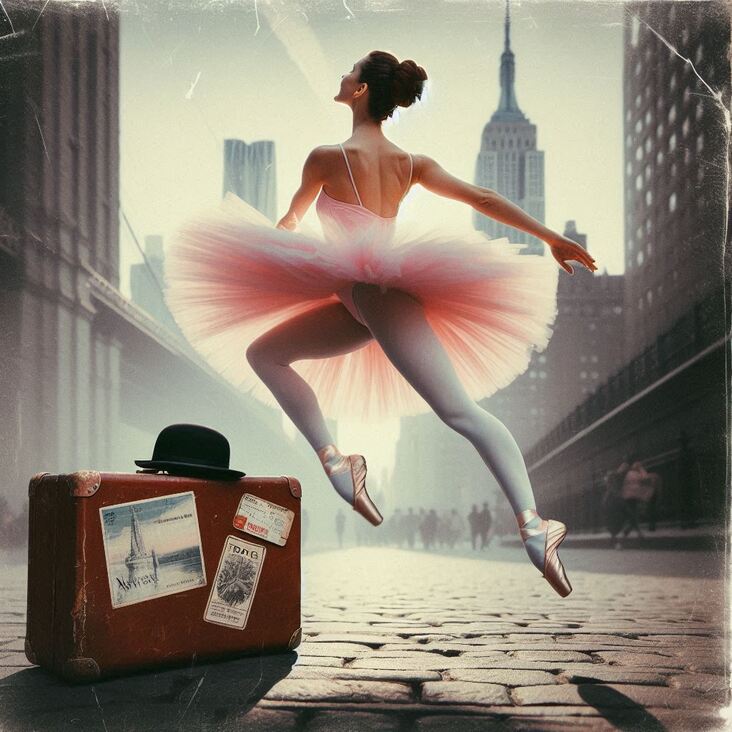
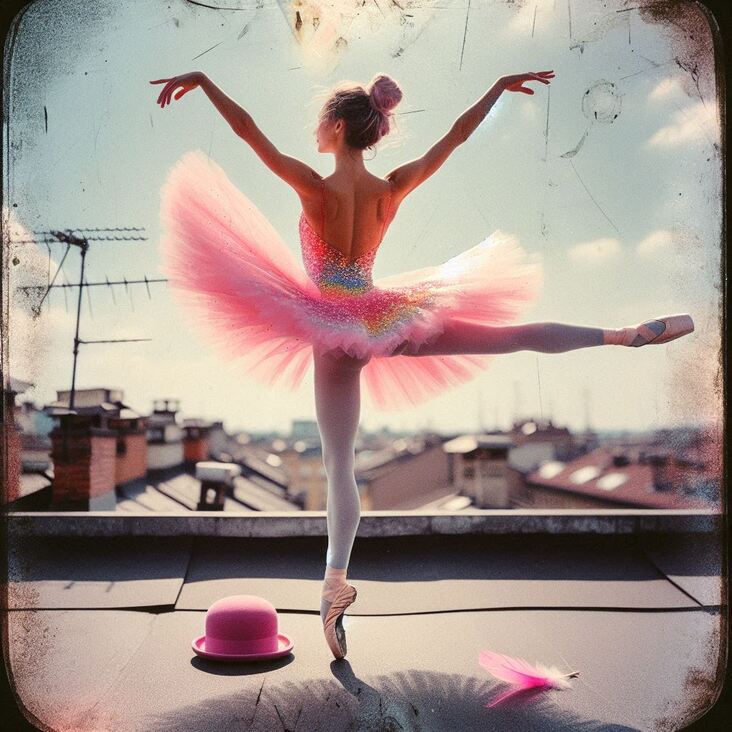
Hello darlings! It’s Emma here, your pink tutu-loving time travelling ballerina blogger, and I’m so excited to be back with you on another #TutuTuesday! Today we’re taking a twirl through time, and diving deep into the fascinating world of ballet tutus!
The year is 2032, and as we step into the month of August, the air is thick with the thrill of the new ballet season. Oh, I simply can’t wait to see the new creations! I've got my eye on the Royal Ballet’s production of “Giselle” and I’m hearing whispers of a fantastic new ballet street show happening in Paris – rumour has it there’s a tutu-tastic scene with an incredible backdrop of the Eiffel Tower, oh my!
But before we get ahead of ourselves, let’s rewind a bit. Back in my Derbyshire home, I’m surrounded by the legacy of ballet history. You wouldn't believe the treasures I've stumbled upon in vintage dance shops, museums and dusty attics - real-life relics that bring to life the glorious evolution of the tutu!
It’s time for a little time travel, darlings! So, let’s put on our imaginary rose-tinted spectacles and climb aboard my trusty, tutu-filled time train (because everyone knows, pink tutus and train travel go together perfectly)! We’ll be hopping around a few of history’s most enchanting ballet periods to uncover the stories behind those oh-so-graceful skirts. Buckle up, let the adventure begin!
From Courtly Splendour to Ballet Bloom:
Now, if you can believe it, back in the 15th century, dance was mainly seen as an elegant form of social entertainment for the upper crust of society – kind of like a refined, pre-tutu version of the ballroom dances we love today. These “courtier dances”, as they were called, were performed by elegantly attired ladies and gentlemen in flowing, elaborately designed gowns.
But it wasn't until the early 1700s when, ooh la la, the ballet as we know it started to emerge. Our time train is now chugging along to 17th century Italy, a nation that was truly obsessed with all things dance, where, “ballet as entertainment” took the stage. Imagine grand theatres with crystal chandeliers, twinkling candles, and of course, our first inklings of the ballet tutu. The iconic, flowing skirts began to take shape during this time! These were initially crafted from fabrics like satin and taffeta, featuring lavishly decorated, knee-length bodices and, wait for it, detachable hoops – fancy that! Talk about the birth of a dramatic outfit!
Enter the tutu-tastic Romantic Era
Our time train is rolling on to the 19th century, a time that marked a turning point in ballet, a time filled with swirling tutus and stories of forbidden love! Oh, darlings, this is where we find the "ballet tutu” truly taking centre stage! And, oh, how I adore the era's obsession with soft tulle! This era brought about the rise of Romantic Ballet and we're talking about stories of fairies, sprites, and of course, the legendary Giselle (whose famous costume was originally crafted from silk gauze!). Oh, I love Giselle! Just a whisper of romance, tragedy, and, of course, some of the most incredible tutu-tastic moves!
The ballet tutus of this era became iconic for their sheer fabrics, which created that heavenly cloud-like effect. Think of Marie Taglioni's La Sylphide, that's what it’s all about! It’s that floating, ethereal quality that captivated audiences, showcasing the graceful movements of the ballerinas and truly making their jumps and spins absolutely magnifique!
The evolution of the tutu in the 19th century was fascinating! From the delicate, flowing Romantic-era tutus with their cloud-like effect to the more structured tutus introduced by Marius Petipa in the late 1800s – ballet's favourite tutu is truly a chameleon of dance.
The tutu continues to Twirl & Transform
We're fast-forwarding to the 20th century and beyond – a period bursting with change and exciting styles for the tutu. We’ve got the tutu of the Ballets Russes (those incredible swirling creations), then came the ‘New York City Ballet’ style tutu (and all that structured, geometrical brilliance), and of course, the playful layered tulle tutu that allows dancers to achieve all kinds of intricate whirlwinds of motion. We also can't forget about the "ballet street" trend, where tutu creations are transforming themselves to become more contemporary, urban, and, frankly, a little bit fierce!
A pink-tastic #TutuTuesday tradition!
There we have it, darlings! Our tutu-licious journey through history! Each era brought with it something unique and special. But the enduring beauty of the ballet tutu – that is the thing that never changes! It embodies the spirit of movement, grace, and artistry that keeps audiences enthralled all over the world. And I, my darling, will forever be in love with the iconic and the ever-evolving ballet tutu.
Now, before you go, I must insist that we share a *"tutu-tastic" moment! *
On August 10th, the 2032 International Ballet Festival will be held here in Paris! And as you all know, I will be attending every performance I can! I can't wait to see the legendary "Swan Lake" by the Ballet de l’Opéra de Paris and the exciting new production of "Cinderella" at the Theatre du Châtelet! You can catch my live tweets and updates over on Twitter and Instagram, #TutuTravels – it's going to be a pink explosion of tutus and pure balletic magic!
Remember, dear readers, there is a special place in this world for a ballerina who wants everyone to wear pink!
Now, grab your tutus, darlings, and join me on the dance floor!
Until next time, keep those tutus twirling and don't forget to embrace the power of pink!
Yours in pink tulle,
Emma x